So You Want to Learn Kathak — But You Think You're Too Old
You're not. And this isn't a pep talk. After a decade of teaching adults who walked in nervous and walked out transformed, we have the receipts.
Kala Kuteer
Performing and Fine Arts School, Hyderabad
नृत्यं सर्वस्य जीवनं भवति
Dance becomes the life of all things — Natyashastra
Let's get the obvious out of the way. Yes, many Kathak dancers start young. Yes, there are seven-year-olds at our school who can do things with their feet that would make your jaw drop. But here's what nobody tells you: some of the most magnetic students we've ever trained at Kala Kuteer walked in at 30, 40, even 55 — with absolutely zero dance experience.
What they brought instead was something a child can't: life. The ache of separation that makes a thumri hit differently. The patience to sit with a rhythm until it becomes second nature. The humility to be a beginner again after decades of being an expert at something else. There's a reason the old teachers used to say "jab jaago, tabhi savera" — whenever you wake up, that's your morning. It's never too late.
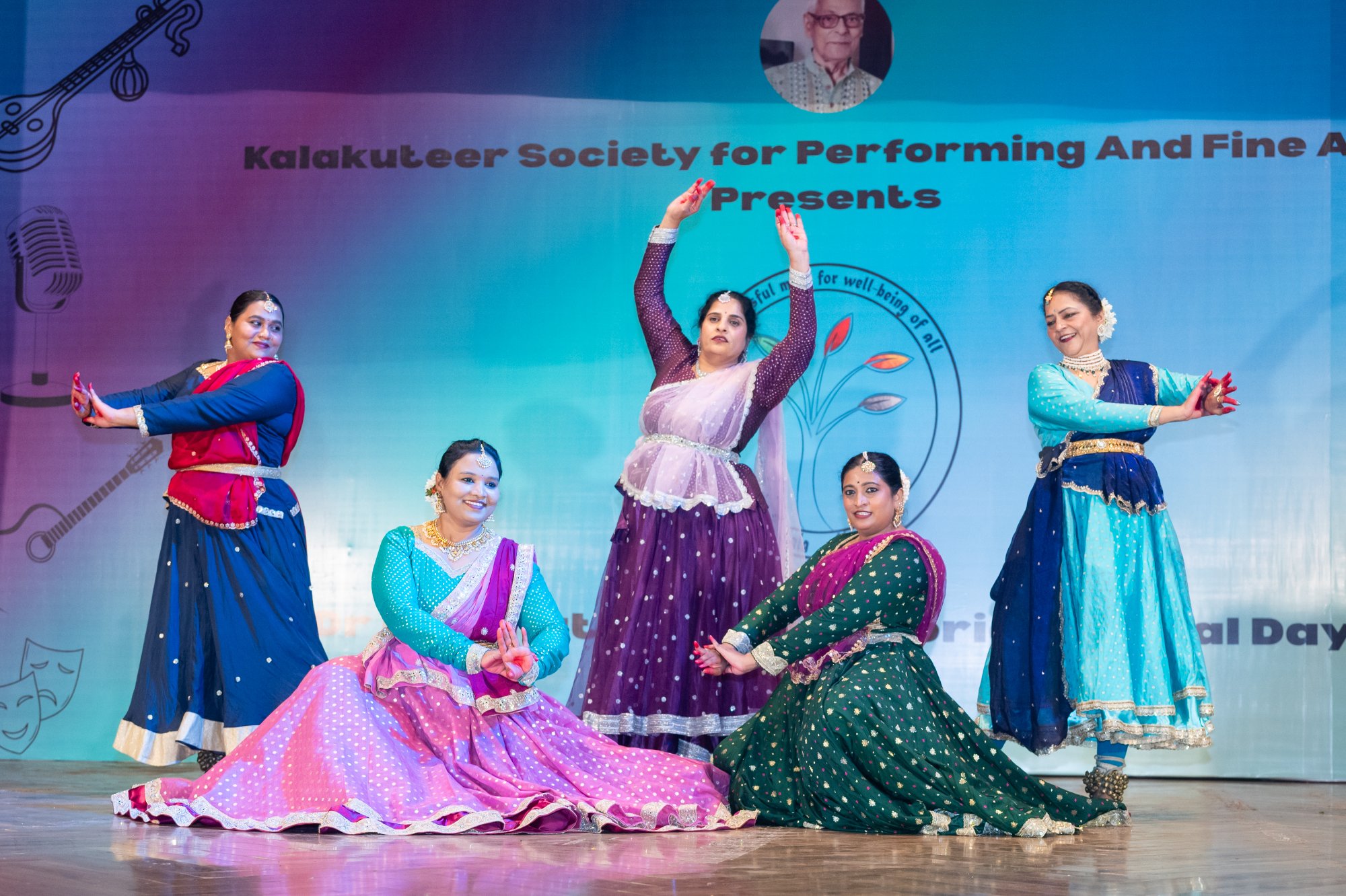
"Kathak doesn't care how old you are. It cares how deeply you're willing to listen."
— Mrs. Rupa Bhattacharya, Co-founder & Kathak Guru
Your First Class Won't Be What You Expect
Nobody's going to ask you to do a spin on day one. Forget whatever you've seen on Instagram reels. A real Kathak class starts small — almost meditative. You'll learn tatkar, the basic footwork patterns. You'll clap along to Teentaal until the 16-beat cycle feels as natural as breathing. You'll practice a few hastak — hand gestures — and your guru will gently correct your wrist angle six times until it clicks.
That's it. And that's enough. As they say in the parampara: "dheeraj ka phal meetha hota hai" — the fruit of patience is always sweet. The beauty of classical training is that the fundamentals are the same whether you're six or sixty. Everyone starts at the same door.
एकं सत् विप्राः बहुधा वदन्ति — Rigveda
What Makes Our Kathak Training Different
Original Compositions
Our gurus compose the music themselves. No borrowed recordings. Every piece is born in this gurukul.
Live Tabla Sangat
You train with a live Tabla player. Not recordings. A real musician, breathing with you.
Two Gharanas, One School
Lucknow's expressive grace meets Banaras's rhythmic fire. You get the full picture.
Why Live Tabla Changes Everything
This is the hill we'll die on, honestly.
Most Kathak classes in Hyderabad — and across India — run on recorded music. A track plays, you dance to it, the track doesn't care if you speed up or slow down. It's like learning to have a conversation by talking to a wall.
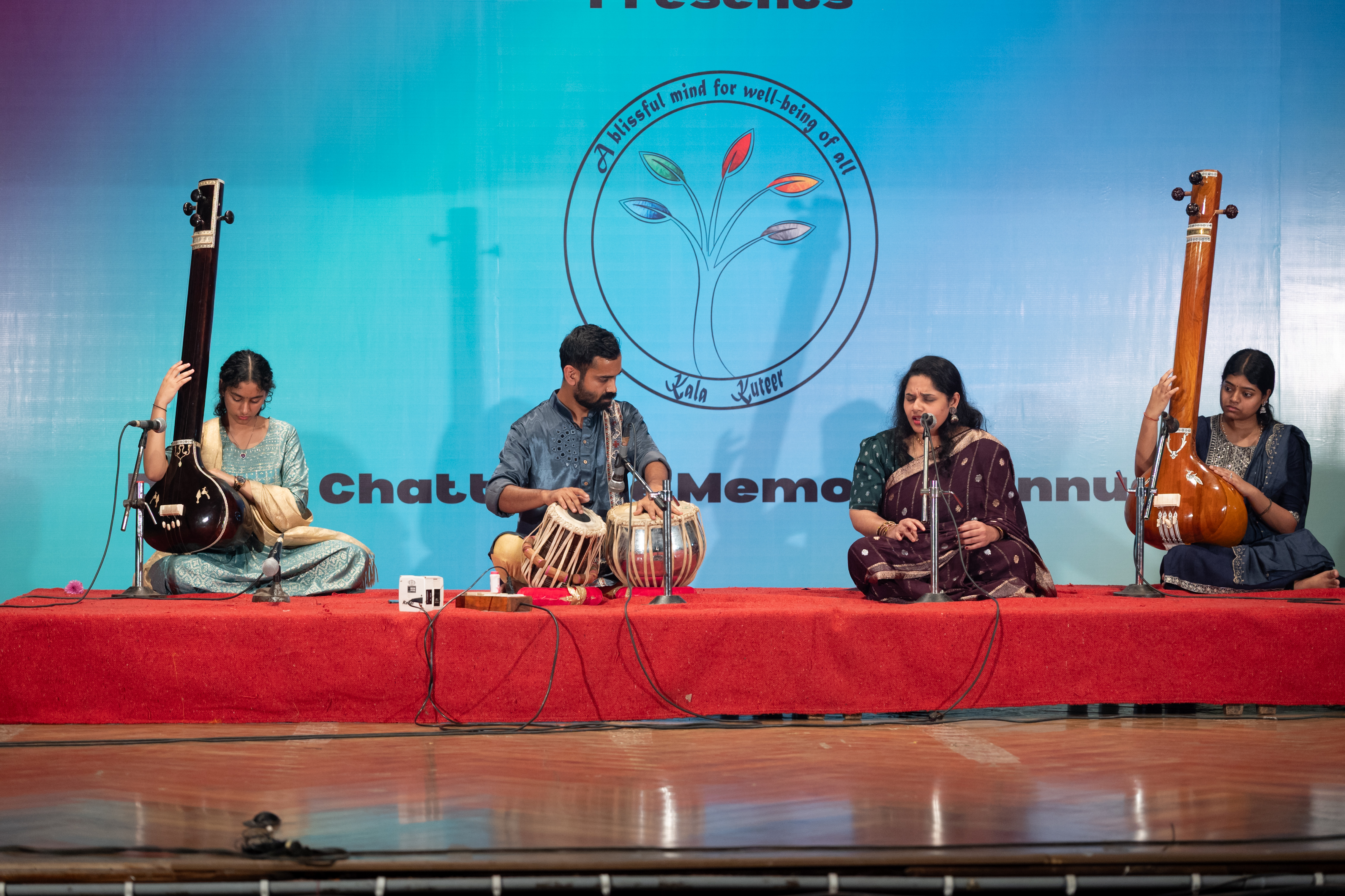
At Kala Kuteer, every Kathak student — beginner to advanced — trains with a live Tabla player in the room. There's a human being across from you responding to your rhythm in real time. When you hesitate, the Tabla adjusts. When you find your groove, the Tabla pushes you. It's a jugalbandi of sorts, and it changes how you hear music forever.
We do this for Sitar and Hindustani vocal students too. Live Tabla sangat across disciplines. It's not a gimmick — it's how classical music was always meant to be learned. In a baithak, together, the way the old ustads and gurus did it. Sangeet literally means "together in music." We take that literally.
Lucknow Meets Banaras
The Lucknow gharana is the one that makes you feel things — delicate storytelling, emotional abhinaya, the kind of movement that silences a room. The Banaras gharana makes your heart pound — powerful footwork, layered rhythmic patterns, raw kinetic energy.
Our style draws from both. You'll develop the softness of Lucknow and the fire of Banaras. You won't just tell a story — you'll have the footwork to punctuate it. As the saying goes: "kala ka arambh shraddha se hota hai" — art begins with devotion. We bring that devotion from two of India's greatest Kathak traditions.
"But I Have No Rhythm"
We hear this one a lot. And every single time, we think: good, then you're exactly who we want to teach.
Rhythm isn't a gift you're born with. It's a muscle you build. And because you're doing this with a live Tabla player, you internalize rhythm as something alive, not mechanical. "Boondon boondon se ghada bharta hai" — drop by drop, the pot fills. Give it three months.
What to Look For in a Kathak School
Guru lineage matters.
Guru bin gyan nahi — without a guru, there is no knowledge. At Kala Kuteer, three generations — the late Dr. P.C. Chatterjee, Mrs. Rupa Bhattacharya, and Mr. Abhinav Bhattacharya.
Ask if they use live musicians or recordings.
This is the single biggest differentiator. Recordings are convenient. Live sangat transforms you.
Check if adults actually perform on stage.
At Kala Kuteer, every student — every age, every level — gets stage time at our Annual Day. Non-negotiable.
Certification should be optional.
We're ABGMM affiliated — 99% pass rate. But exams are always your choice, never imposed.
The Part Nobody Talks About
The physical benefits are real — better posture, stronger legs, core strength from chakkars. But the adults we teach talk about something else entirely.
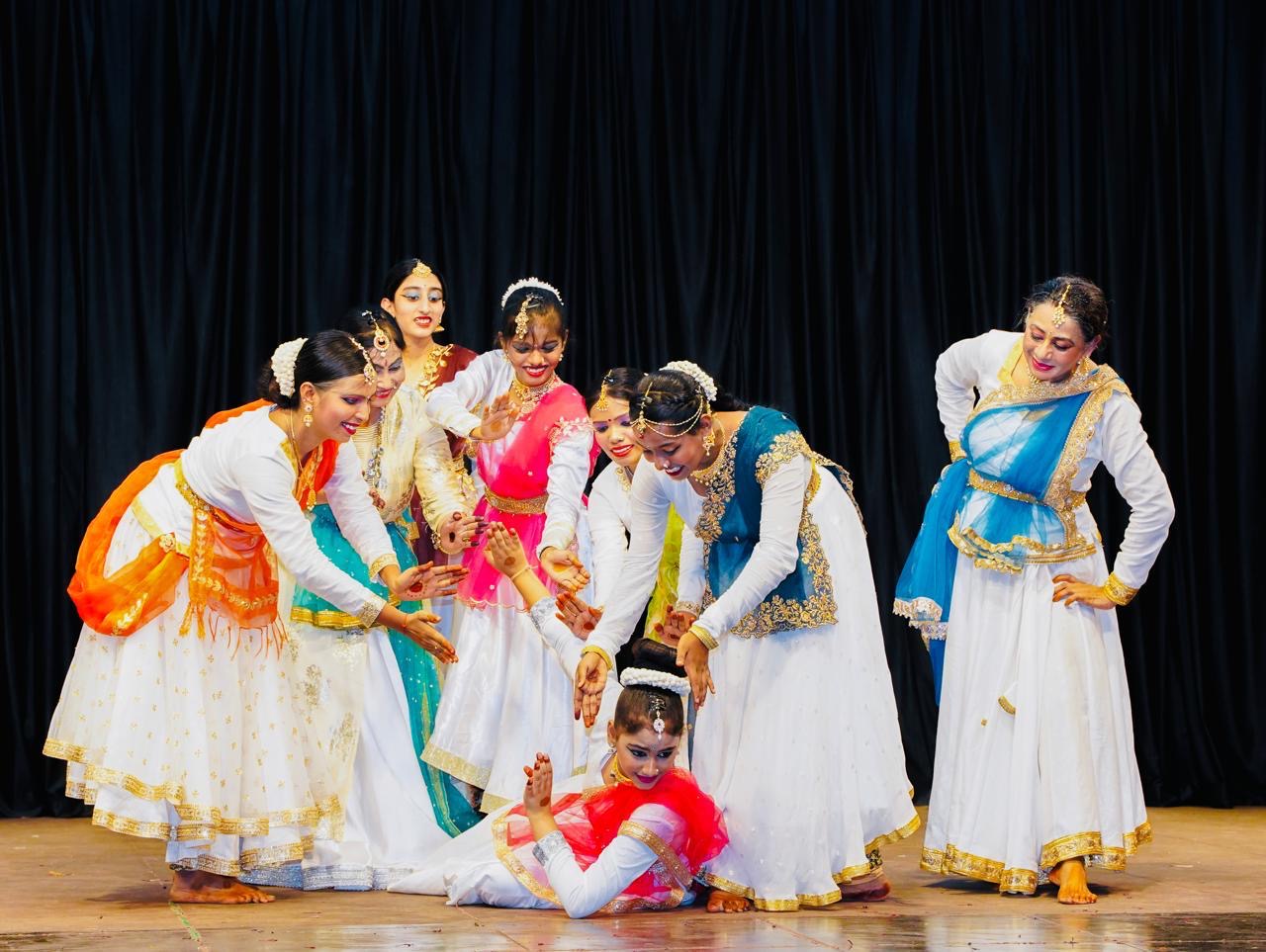
They talk about the quiet. The hour where the phone is away and the only thing that matters is the next beat. They talk about the community — sharing a room with a teenager and a retired professor and a working mother, all learning the same tukda, all equally terrible at it for the first ten minutes, all equally proud by the end. That's the anand — the bliss — of being a student again.
"I came for the exercise. I stayed for the silence between the beats."
— An adult student, 2 years in
So. Are You Ready?
Shubhasya sheeghram — begin auspicious things without delay. We're at Tarnaka and Gachibowli in Hyderabad, and if you're not in the city, we run live Zoom classes for students across India, the US, Russia, Chile, and France.
Come for a trial class. Wear something comfortable. Bring your skepticism. We'll take it from there.
आरम्भः अर्ध सिद्धिः — To begin is half the victory
Start Your Kathak Journey
Book a trial class at Tarnaka, Gachibowli, or online via Zoom.
WhatsApp Us