ABGMM Exams, Demystified
The Gandharva Mahavidyalaya certification sounds intimidating until you understand how it actually works. Here's everything we wish someone had told us before our first batch sat for the exam.
Kala Kuteer
Performing and Fine Arts School, Hyderabad
सा विद्या या विमुक्तये
That is true knowledge which liberates — Vishnu Purana
If you're learning Indian classical music seriously — or even semi-seriously — someone's probably mentioned the Gandharva Mahavidyalaya exams. Maybe your teacher brought it up. Maybe another parent mentioned their child was "doing Visharad." Maybe you Googled it and landed on a confusing website with no clear answers.
Let's fix that.
What ABGMM Actually Is
ABGMM stands for Akhil Bharatiya Gandharva Mahavidyalaya Mandal. Headquartered in Mumbai, it's one of the oldest and most respected music examination bodies in India — the Indian classical equivalent of Trinity College London. They conduct annual exams in Hindustani music and Kathak dance. It's not just a piece of paper. It's proof you've walked the path with discipline. "Padhai likhai," as the elders say.
क्रमशः — Step by step
The Exam Levels
Praveshika / Parichay
Foundation. Basic ragas, taals, theory. Shubh aarambh — the auspicious beginning.
Madhyama
Intermediate. Deeper raga exploration and complex compositions.
Visharad
Advanced. Performance-level mastery. Where serious musicians find their voice.
Alankar
The highest level. Professional path and academic credential.
Do You Actually Need a Certificate?
Honestly? Not everyone does. If you're learning Sitar because it brings you peace after a long work day, nobody's going to ask for your diploma. "Mann changa toh kathauthi mein Ganga" — if the heart is pure, the Ganga flows even in a bowl. The joy of learning is its own reward.
But there are situations where it genuinely opens doors:
University admissions
Indian and international universities recognize ABGMM for scholarships and credits. Several of our alumni got into global universities partly on music credentials.
Teaching careers
Parents hiring a guru want proof you've been through the fire. A recognized certificate provides that credibility.
Professional performance
Event organizers take you seriously with Visharad or Alankar behind your name. It signals rigorous evaluation.
Personal milestones
Working toward an exam gives your practice direction and that deeply satisfying moment when the result arrives.
"We never push a student toward exams. Nishkaam karma — action without expectation of result — is a beautiful way to learn."
— Mr. Abhinav Bhattacharya, Director
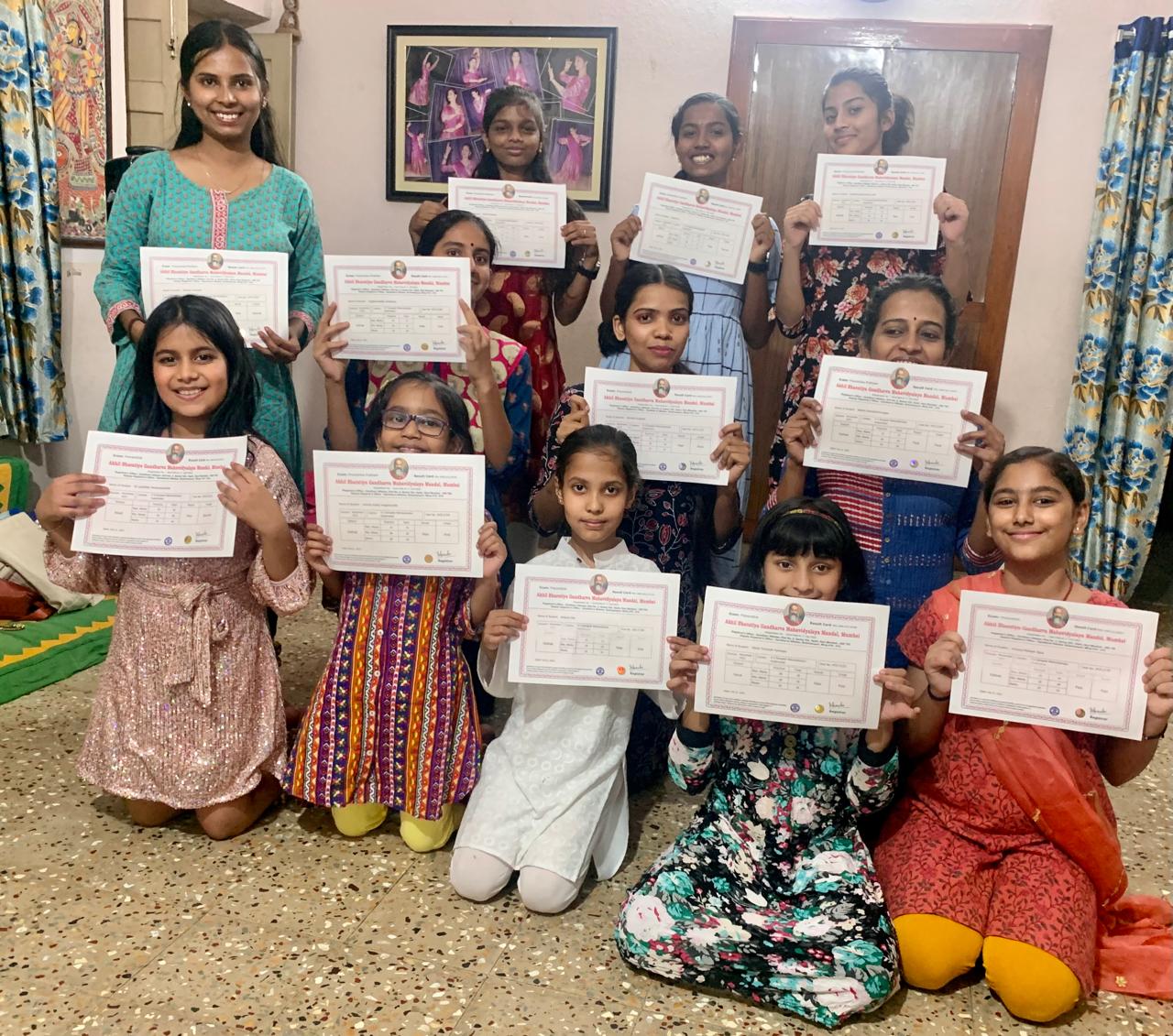
How We Prepare Students (and Why 99% Pass)
We don't do "exam prep" as a separate thing. The daily training — raga practice, taal work, theory — is structured so that if you've been learning consistently, the exam is just a formality. "Abhyaas ka koi substitute nahi hota" — there's no substitute for consistent practice.
Our gurus compose original pieces in the classical tradition. When a student performs an original composition at the exam instead of the same bandish everyone memorized off YouTube, examiners notice. It shows parampara — a living tradition, not rote learning.
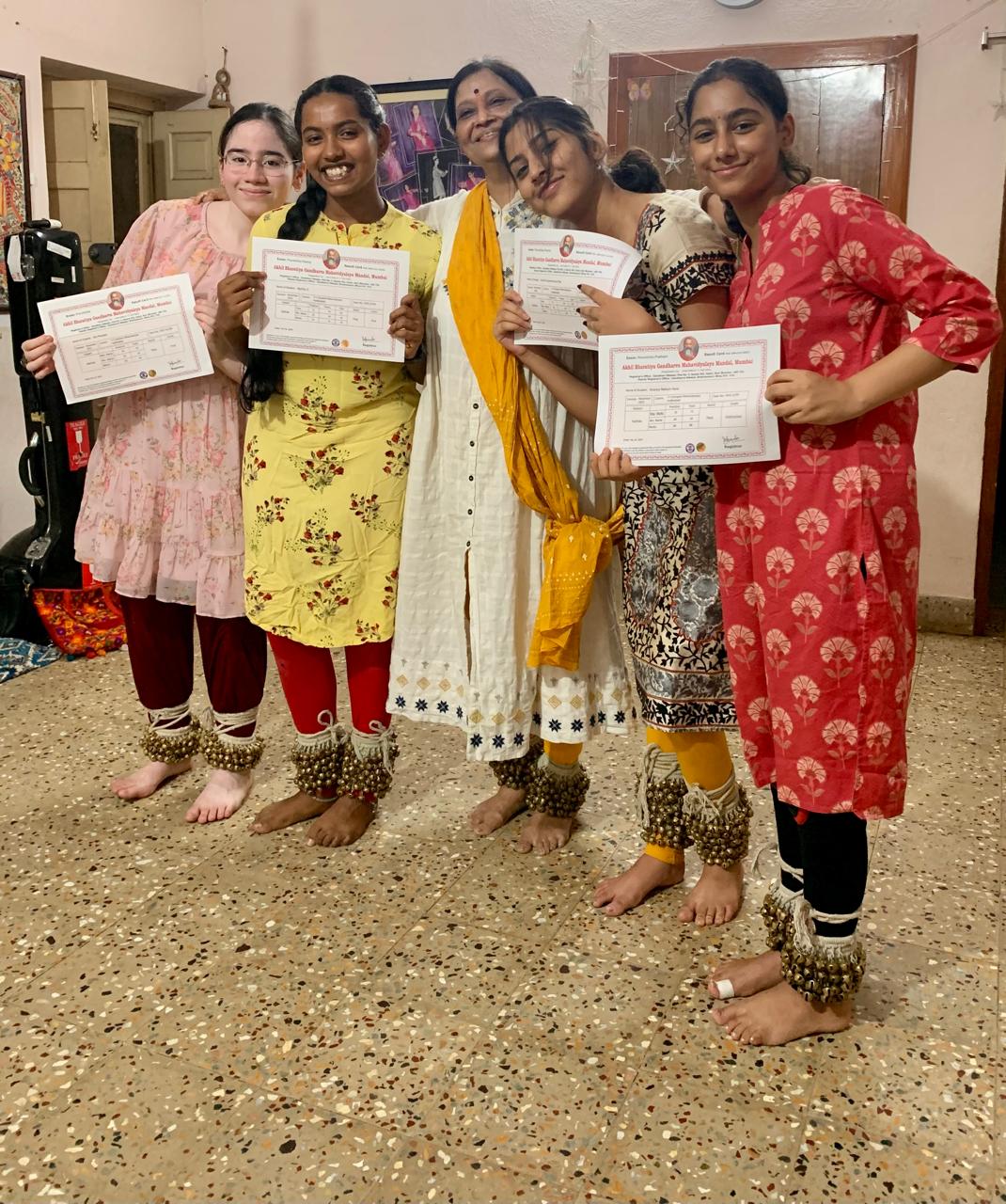
And because our students practice with live Tabla sangat regularly — Kathak, Sitar, and Vocals alike — they walk into the exam room with a rhythmic confidence that students trained on recordings simply don't have. The examiner plays a taal, and our students don't flinch. They've been having that conversation for months.
99%
Pass Rate
12+
Years
3
Generations
How to Get Started
No minimum age. No audition. No prerequisite. Apni apni chaal — everyone walks at their own speed. At Kala Kuteer, we run classes at Tarnaka and Gachibowli in Hyderabad, and online via Zoom worldwide. Same gurus, same three-generation lineage, since 2014.
Whether you sit for the exam or not, the structured sadhana will make you a better musician. That much we can promise.
गुरुर्ब्रह्मा गुरुर्विष्णुः — The guru is the beginning of all knowledge
Questions About Certification?
Talk to us about ABGMM preparation in Vocals, Sitar, or Kathak.
WhatsApp Us