What's the Right Age to Start Learning Indian Classical Music?
Parents ask us this every single week. The answer isn't a number — it's a set of signs. Here's what a decade of teaching students aged 5 to 65 has taught us.
Kala Kuteer
Performing and Fine Arts School, Hyderabad
बालस्य नैसर्गिको गुणः कला
Art is a child's natural gift — ancient wisdom
Every week, at least one parent walks into Kala Kuteer and asks: "Is my child the right age to start?" Sometimes the child is 4. Sometimes they're 14. Sometimes it's a 45-year-old asking for themselves with a sheepish grin, like they need permission.
Here's the truth we've arrived at after teaching hundreds of students across every age group: there is no single "right" age. There is only readiness. And readiness looks different for every art form and every child.
Ages 5–7: The Seed-Planting Years
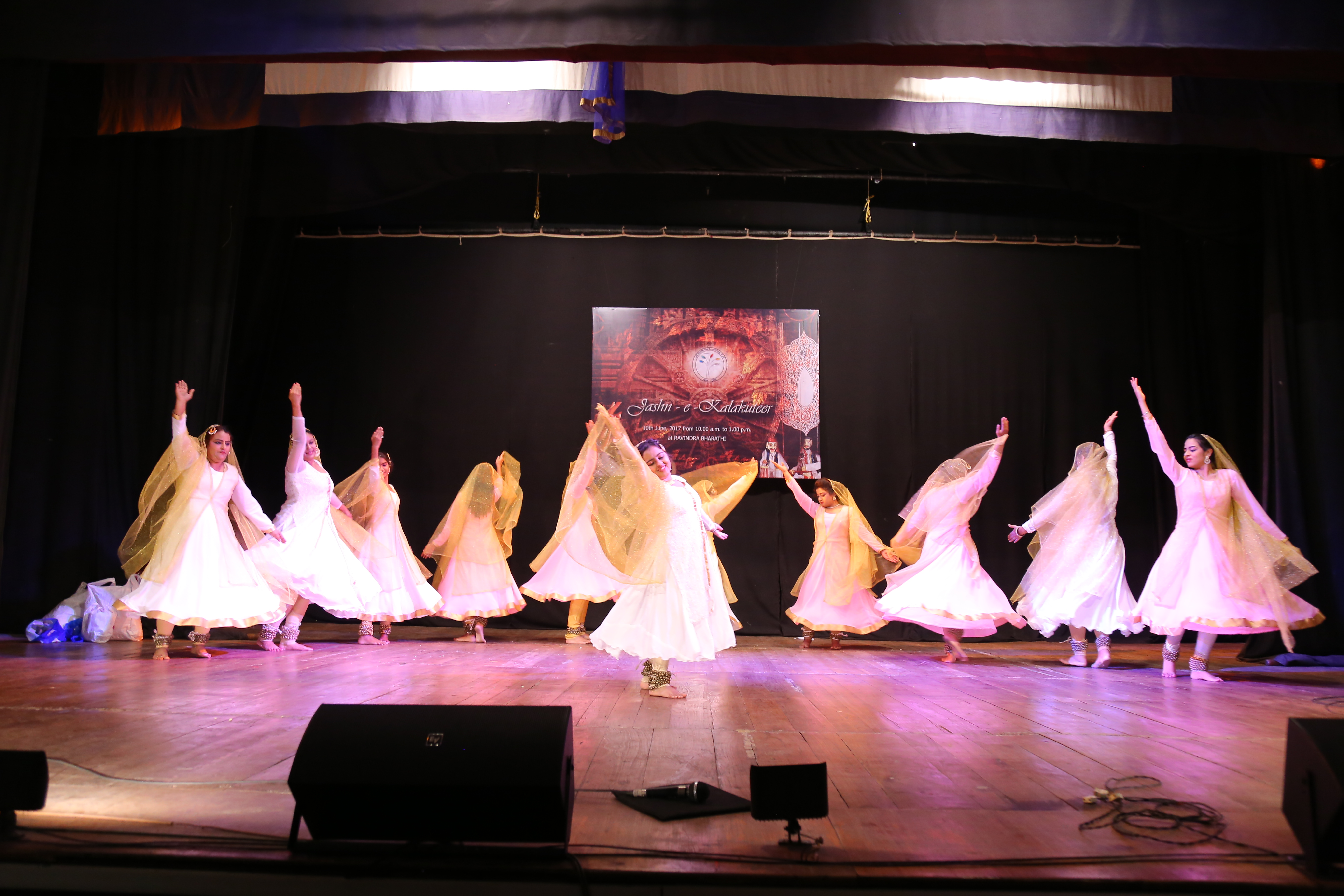
This is when most children can start — not because they'll master anything, but because their brains are wired for absorption. At this age, Kathak works beautifully. The rhythmic clapping, the footwork patterns, the storytelling through gesture — it's essentially structured play. Children don't even realize they're building taal intuition that will serve them for life.
For vocals, this is the age of "sur lagana" — learning to match pitch. We don't push theory on five-year-olds. We sing with them. We let them absorb the sound of a raga the way they absorb a mother tongue — naturally, without grammar books. As the old saying goes, "jaise desh waisi bhesh" — match the method to the child, not the child to the method.
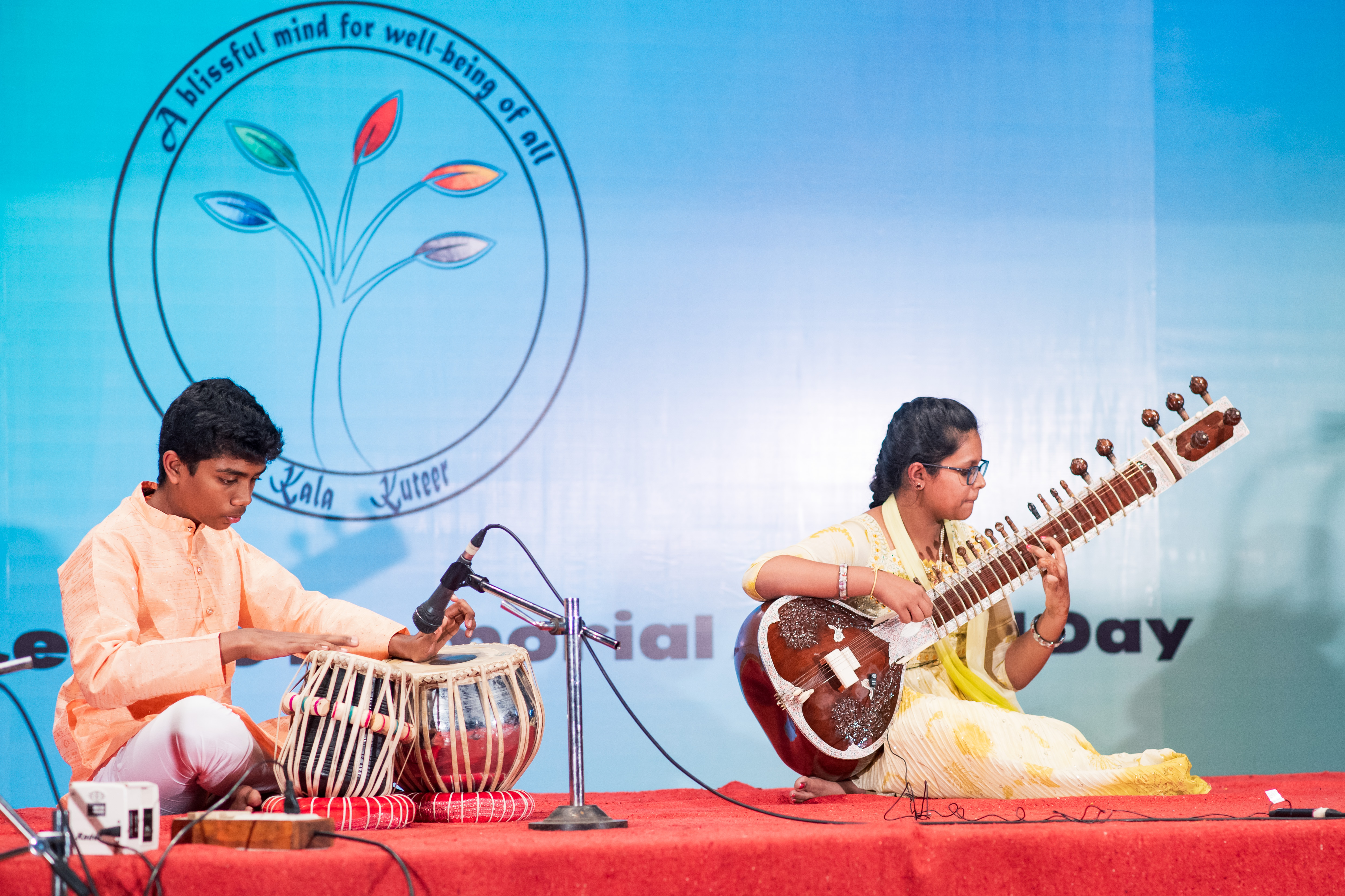
Instruments like Sitar and Tabla are usually better from age 7-8 onward, simply because smaller hands struggle with the physical demands. But every child is different.
Ages 8–12: The Golden Window
If we had to pick an ideal starting range, this would be it. Children at this age can follow structured instruction, practice independently, handle basic theory, and — crucially — they're still young enough to build the muscle memory and ear training that becomes the foundation for everything that follows.
This is also the age when ABGMM examinations become meaningful. Our students who start at 8-9 often reach Madhyama level by their early teens — a genuine accomplishment that looks impressive on school applications and builds extraordinary discipline. "Jo boya so kata" — you reap what you sow, and the seeds planted at this age bear fruit for decades.
"The best students aren't the ones who start youngest. They're the ones whose curiosity is genuine."
— Mrs. Rupa Bhattacharya, Co-founder
Teenagers: The Underrated Beginners
Parents sometimes worry that 13 or 14 is "too late." It absolutely isn't. Teenagers who choose to start classical music on their own — not because a parent forced them — are some of our most focused students. They know why they're in the room.
Plus, for students applying to universities abroad, a serious commitment to Indian classical music at the high school level — especially with ABGMM certification — stands out on applications. Several of our students have leveraged their musical training for university admissions. The arts are not a "nice to have" — they are a genuine differentiator.
Adults: It's Never Too Late. We Mean It.
We've written a whole separate article about this (read it here), but the short version: adults make exceptional students. They bring patience, emotional depth, and a conscious choice to learn. At Kala Kuteer, our community includes students from age 5 to 65, all learning alongside each other. "Jab jaago, tabhi savera" — whenever you wake up, that's your morning.
Signs Your Child is Ready
They can sit in one place for 20-30 minutes with attention. Not perfectly still — just engaged.
They show curiosity about music or dance — humming, tapping, moving to rhythms, asking questions about instruments.
They can follow simple instructions from someone other than a parent. This is about being ready for the guru-shishya relationship.
They show interest willingly — not because you signed them up, but because something about it calls to them.
If your child shows these signs, bring them to Kala Kuteer for a trial class. We'll be honest with you about what we see. Sometimes we tell parents to wait six months. Sometimes we say start tomorrow. We'd rather get it right than get a registration fee.
गुरुः साक्षात् परं ब्रह्म — The guru sees the truth in every student
Not Sure? Bring Them In.
A trial class will tell you more than any article. Tarnaka, Gachibowli, or Zoom.
WhatsApp Us